
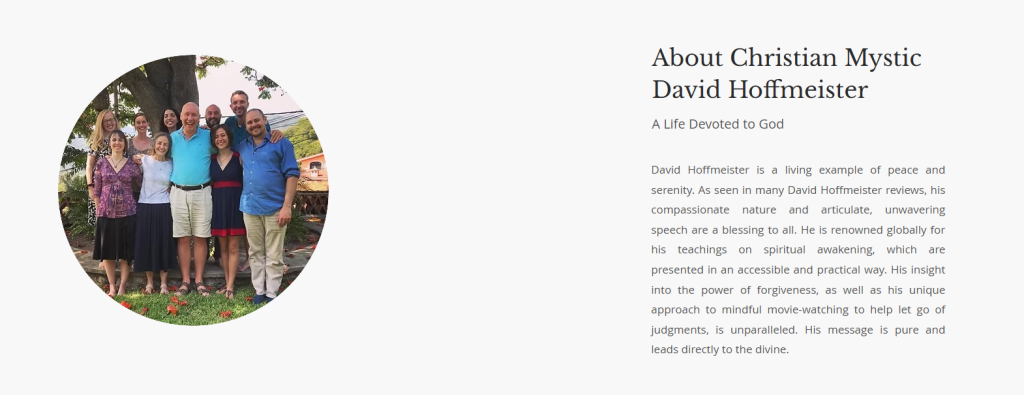
The search phrase david hoffmeister controversy is often used by readers trying to understand not only public opinions but also how David Hoffmeister’s teachings evolved over time. In most cases, the word “controversy” does not refer to any verified wrongdoing. Instead, it reflects changes in interpretation, shifting teaching styles, and evolving spiritual philosophy.
This article focuses specifically on the developmental journey of his teachings, how his ideas matured, and why different stages of his work are sometimes interpreted differently by audiences.
📊 Teaching Evolution Overview
| Phase | Description |
|---|---|
| Early Phase | Personal spiritual exploration |
| Development Phase | Deep engagement with ACIM |
| Expansion Phase | Global teaching outreach |
| Digital Phase | Online retreats and content sharing |
| Current Phase | Mature non-dual interpretation |
His teachings did not appear in a fixed form; they evolved gradually through experience and study.
🧭 Early Spiritual Journey
David Hoffmeister’s early phase is often described as a period of:
1. Inner Searching
- exploration of meaning and truth
- questioning traditional belief systems
- interest in spiritual psychology
2. Encounter with A Course in Miracles (ACIM)
This became a turning point:
- introduction to non-dual concepts
- focus on forgiveness as inner process
- shift from external religion to internal awareness
3. Transition in Perspective
During this stage:
- emphasis moved from external reality to internal perception
- personal experience became central
- conceptual understanding deepened
📘 Development Phase of Teachings
As his understanding of ACIM deepened, his teaching style became more structured.
Core Changes:
- increased focus on experiential learning
- emphasis on perception shift
- reduced reliance on intellectual explanation
- stronger non-dual interpretation
Key Teaching Elements Introduced:
- forgiveness as mental release
- illusion of separation
- inner peace as natural state
- mind-based reality interpretation
🌍 Expansion of Global Teaching
After the foundational phase, his teachings expanded internationally.
Key Developments:
- international retreats began
- online teaching formats introduced
- recorded video teachings circulated
- global student communities formed
Characteristics of Expansion Phase:
- wider audience reach
- diverse cultural interpretation
- increased visibility online
- growing discussion and debate
This expansion is one reason why public interpretation began to vary widely.
💻 Digital Phase and Modern Distribution
The digital era significantly changed how teachings were accessed.
Key Features:
- YouTube and online videos
- streaming-based retreats
- website-based learning content
- global accessibility without physical boundaries
Impact of Digital Transition:
- teachings became more fragmented
- short clips circulated widely
- context was often missing
- interpretations multiplied
This phase strongly influenced how “controversy” perceptions formed online.
🧠 Philosophical Development Over Time
David Hoffmeister’s philosophy shows gradual refinement:
1. Early Understanding
- more structured explanation of ACIM
- focus on conceptual learning
2. Middle Development
- stronger emphasis on experience
- less theoretical framing
- deeper non-dual interpretation
3. Mature Phase
- simplified message of forgiveness and perception shift
- focus on lived experience rather than explanation
- consistent non-dual framework
📊 Evolution Comparison Table
| Phase | Focus | Teaching Style | Audience Experience |
|---|---|---|---|
| Early | Exploration | Conceptual | Learning-based |
| Middle | Development | Experiential | Practice-based |
| Expansion | Outreach | Global teaching | Diverse interpretation |
| Digital | Accessibility | Media-based | Fragmented understanding |
| Mature | Simplicity | Non-dual focus | Direct experience |
🔍 Why Evolution Creates “Controversy” Perception
The keyword david hoffmeister controversy is partly influenced by how teachings changed over time.
Key Reasons:
1. Different Stages, Different Messages
- early teachings may appear more explanatory
- later teachings are more experiential
- audiences compare different phases
2. Fragmented Online Content
- older clips circulate with newer ones
- context is often missing
- contradictions are assumed where none exist
3. Interpretation Gap
- new audiences interpret without background
- long-term followers understand progression
- mismatch creates perceived disagreement
🧩 Teaching Consistency Insight
Despite evolution, core principles remain consistent:
- forgiveness as central practice
- mind-based interpretation of experience
- non-dual understanding of reality
- emphasis on inner peace
The expression changes, but the foundation remains stable.
📌 Public Interpretation Patterns
Audiences generally respond in three ways:
1. Long-term Followers
- understand progression
- accept evolving expression
- focus on core message
2. New Audiences
- encounter fragmented content
- may misinterpret early vs later teachings
- form mixed opinions
3. Critical Observers
- compare different phases literally
- see inconsistency where there is development
- question philosophical structure
📊 Summary Table: Perception Factors
| Factor | Effect on Interpretation |
|---|---|
| Teaching evolution | Perceived inconsistency |
| Digital fragmentation | Loss of context |
| Audience diversity | Mixed reactions |
| Philosophical depth | Interpretation variance |
🧠 Analytical Insight
Teaching evolution is natural in any long-term philosophical or spiritual system. In this case, changes reflect:
- deeper experiential understanding
- adaptation to global audiences
- simplification of core message over time
These factors explain why external observers may perceive debate or “controversy.”
🧾 Final Section
The discussion around david hoffmeister controversy is closely linked to how his teachings evolved across different phases of his spiritual journey. Rather than indicating factual disagreement, it reflects developmental changes, digital content fragmentation, and varied audience interpretation.
Understanding this evolution helps clarify that:
- teachings naturally progress over time
- interpretation varies across phases
- digital media can distort continuity
This provides a clearer and more structured understanding of the subject.
