
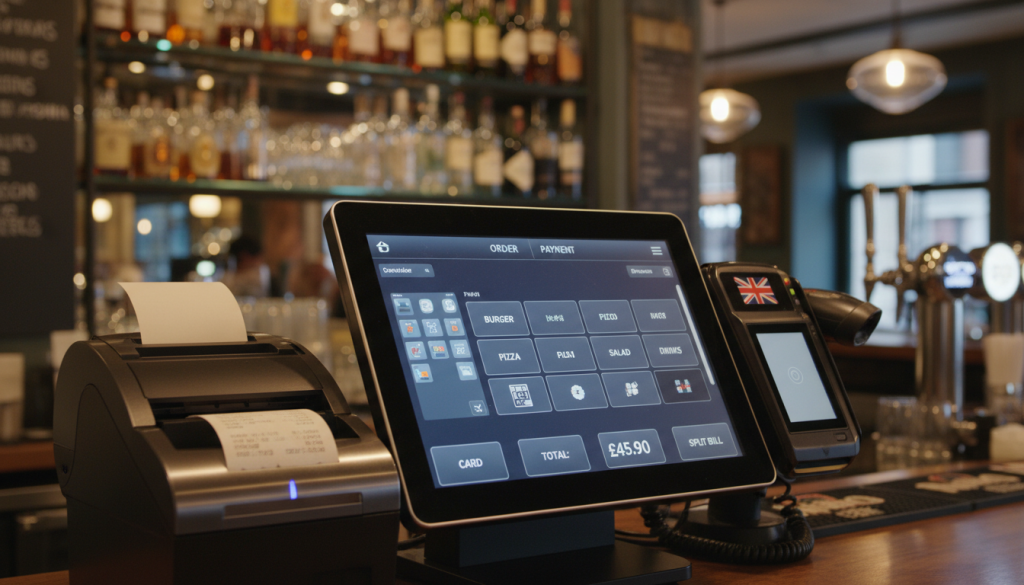
In the competitive world of the UK hospitality industry, the difference between a thriving business and one that struggles often comes down to the tools used behind the scenes. We live in an era where diner expectations are at an all-time high. From the moment a guest walks through the door to the final payment, the experience must be fluid, fast, and flawless.
For many owners, achieving this level of service requires more than just a talented kitchen team; it requires a sophisticated restaurant EPOS system in the UK that acts as the digital heartbeat of the operation.
The Shift from Traditional to Digital
Gone are the days when a simple cash drawer and a handwritten ticket sufficed. Today’s fast-paced environment demands real-time communication between the front-of-house and the kitchen. When you implement a dedicated pos system for restaurants, you are essentially eliminating the “middleman” of manual errors.
Digital systems ensure that orders are transmitted instantly, dietary requirements are never overlooked, and table turnover is optimized. This efficiency doesn’t just improve the guest experience; it directly impacts your bottom line.
Core Benefits of a Tailored POS Solution
Choosing a generic point-of-sale tool might seem cost-effective initially, but a specialized pos system for restaurants offers industry-specific features that save thousands in the long run.
1. Integrated Inventory Control
One of the biggest headaches for any restaurateur is stock management. Modern systems track every gram of produce used. If a chef prepares a signature steak, the system automatically deducts the meat, the sides, and even the garnish from your inventory. This prevents over-ordering and helps identify areas where waste is cutting into your profits.
2. Streamlined Payment Processing
In the UK, the “cash is king” mantra has been replaced by “contactless is essential.” A professional restaurant EPOS system UK handles everything from Apple Pay and Google Pay to traditional chip-and-pin. Furthermore, it allows for easy bill-splitting—a common request in UK dining that used to be a nightmare for waitstaff.
3. Employee Management and Accountability
Managing staff shifts and performance is made simple with built-in clock-in features. You can see at a glance who your top sellers are, which staff members need more training, and how to schedule your team more effectively based on historical peak hours.
Why Cube POS is a Market Leader
For businesses looking for reliability and innovation, Cube POS provides an all-in-one solution that addresses the specific nuances of the British market. Their hardware is built to withstand the heat and spills of a busy kitchen, while their software remains intuitive enough for new staff to learn within minutes.
By integrating your pos system for restaurants with online ordering platforms and delivery apps, Cube POS ensures that you are reaching your customers wherever they are—whether that’s in your dining room or on their sofa at home.
Data: The Secret Ingredient
Perhaps the most underrated feature of a high-quality EPOS is the data it generates. Business owners can access detailed reports from anywhere in the world. You can track:
- Menu Engineering: Which dishes are your high-profit “stars”?
- Customer Trends: When do people visit most, and what are they buying?
- Financial Health: Real-time VAT tracking and daily sales summaries.
This level of insight allows you to stop “guessing” what works and start “knowing.”
Final Thoughts
The hospitality sector is evolving, and technology is the primary driver of that change. Investing in a professional restaurant EPOS system in the UK is no longer a luxury—it is a necessity for those who want to remain relevant and profitable.
By removing the friction of manual processes, you allow your team to focus on what truly matters: providing an unforgettable culinary experience that keeps guests coming back time and time again.
