
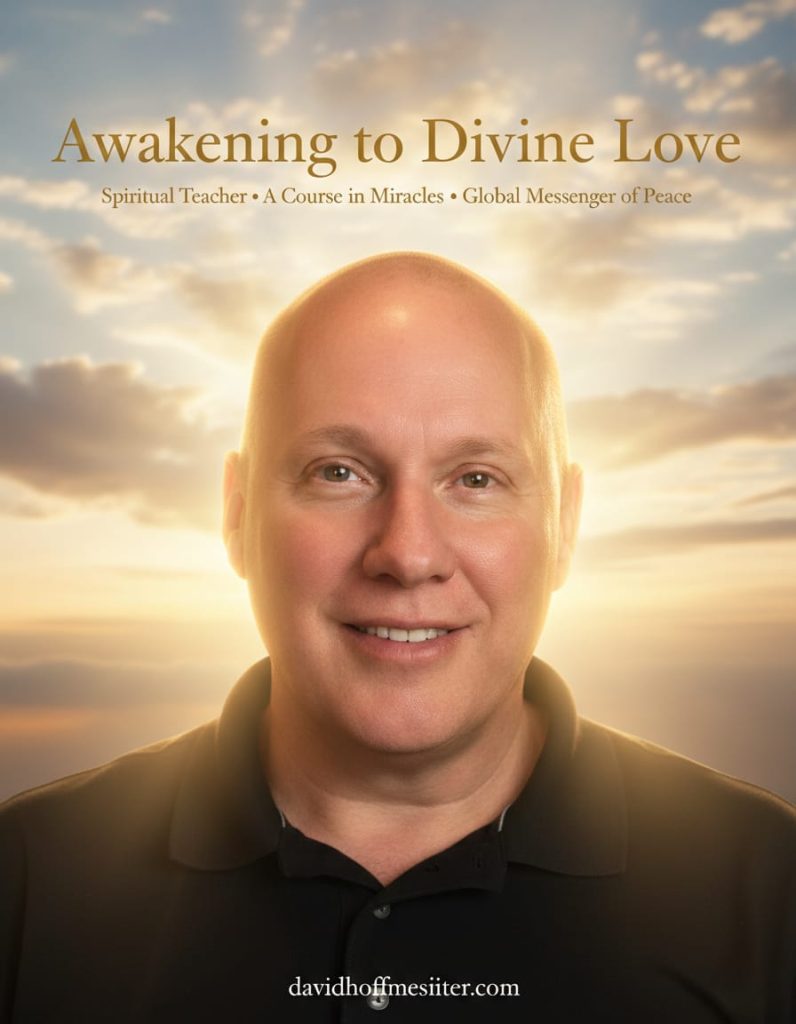
When seekers first encounter the name David Hoffmeister, many begin by searching david hoffmeister wikipedia to understand the basic facts about his life. While such summaries provide dates, affiliations, and a concise biography, they do not capture the essence of his spiritual journey. To gain meaningful insight, one must explore more thoroughly about david hoffmeister, including his teachings, practices, and the experiential dimension of his life devoted to A Course in Miracles (ACIM).
David Hoffmeister is widely recognized as a modern spiritual teacher whose life exemplifies radical surrender, forgiveness, and deep trust in inner guidance. Unlike many teachers whose work is theoretical, his approach emphasizes living the principles consistently.
Early Life and Formative Experiences
David Hoffmeister was born and raised in the United States within a conventional environment, pursuing education, social relationships, and early career opportunities. Like many individuals, his early life was outwardly typical, yet inwardly he felt a persistent sense of longing for something deeper.
Before discovering ACIM, David sought meaning in intellectual pursuits and personal exploration. These early formative experiences provided a foundation for his later commitment to spiritual discipline.
Encounter with A Course in Miracles
In 1986, David Hoffmeister encountered A Course in Miracles, a text emphasizing forgiveness, perception correction, and spiritual awakening. For David, ACIM was not simply theoretical material; it was a practical guide for daily living.
The Course teaches that suffering arises from the ego’s false perception of separation from God. Forgiveness, therefore, is a correction of perception, not merely a social or moral practice. David began applying these lessons systematically in daily life, including Workbook exercises, meditative reflection, and conscious forgiveness of perceived grievances.
This disciplined approach gradually transformed his inner state, fostering increasing peace, clarity, and detachment from ego-based concerns.
Core Principles of His Teaching
Understanding about david hoffmeister requires exploring the central principles of his teachings:
1. Undoing the Ego
David emphasizes that the ego is a constructed identity built on separation, judgment, and fear. Most suffering arises from attachment to this false self. Undoing ego-based perception is the foundation of his teachings.
2. Practical Forgiveness
Forgiveness is not a matter of condoning behavior but correcting misperception. Every emotional disturbance is an opportunity to practice forgiveness and release judgment.
3. Listening to Inner Guidance
David frequently speaks about surrendering the personal will and listening to guidance. He describes decision-making as a quiet, reflective process that prioritizes intuitive direction over ego-driven preference.
4. Integration into Daily Life
A hallmark of his approach is practicality. Spiritual awakening is not reserved for isolated meditation but integrated into relationships, work, and daily challenges.
Radical Surrender and Trust
David Hoffmeister’s lifestyle illustrates radical trust. Over time, he relinquished conventional security structures, including personal career plans, property attachments, and financial predictability.
He explains that following guidance rather than controlling outcomes creates a profound sense of peace. Invitations to teach, travel, and live in various locations were received and embraced as part of a living experiment in surrender.
This approach challenges modern cultural assumptions about security and planning, demonstrating that internal alignment often produces external ease.
Teaching Methods
David Hoffmeister’s teaching style is calm, steady, and experiential. He avoids overly intellectualized presentations, instead focusing on questions of perception and practice.
During workshops, retreats, and talks, he often asks:
- What beliefs are being defended?
- What fear is being projected?
- How can this situation be used for forgiveness?
His communication emphasizes the importance of experiential verification over theoretical agreement.
Living Miracles Community
David is closely associated with the Living Miracles community, a spiritual collective dedicated to practicing ACIM principles. The community functions as a practical environment for learning through experience rather than theory.
Members engage in:
- Transparent emotional sharing
- Prayer-based decision-making
- Collaborative living arrangements
- Supportive practices for spiritual growth
The community environment provides an applied context in which forgiveness and perception correction are tested daily.
Addressing Misunderstandings
Some critics assume that reliance on inner guidance or surrender could lead to passivity or irrationality. David clarifies that true surrender requires vigilance, discernment, and ongoing self-observation.
Similarly, forgiveness is sometimes misinterpreted as avoidance. In reality, it demands courage and willingness to question one’s own perception rather than projecting blame externally.
Psychological and Spiritual Intersections
David Hoffmeister’s approach aligns with several psychological principles:
- Observing thoughts without attachment mirrors mindfulness practices.
- Reframing perceived offenses aligns with cognitive restructuring.
- Emotional regulation through forgiveness parallels modern therapeutic strategies.
However, his framework extends beyond psychology into metaphysical understanding: perception shapes reality, and internal peace transcends circumstance.
Digital Presence and Global Influence
Over the past decades, David Hoffmeister has reached audiences worldwide through retreats, workshops, recorded talks, and online resources. Digital accessibility allows seekers from diverse backgrounds to engage deeply with ACIM principles, even if they cannot attend in-person events.
His global influence demonstrates that practical spirituality can adapt to contemporary communication technologies while retaining core teachings.
Practical Steps for Seekers
Those inspired by David Hoffmeister can begin practical application:
- Study ACIM Workbook lessons daily.
- Observe emotional disturbances as opportunities to practice forgiveness.
- Pause before reacting to conflicts, seeking inner guidance.
- Release attachment to external control.
- Integrate reflective practice into relationships and work.
Consistency and sincerity are essential; transformation unfolds gradually over time.
The Significance of His Life
Searching david hoffmeister wikipedia provides factual biography. Exploring about david hoffmeister provides philosophical and experiential insight. Observing his decades-long consistency offers an example of how surrender and forgiveness can be applied in everyday life.
David’s example challenges cultural assumptions about success, ambition, and security, offering a model rooted in inner peace rather than external achievement.
Conclusion
David Hoffmeister’s life represents a sustained spiritual experiment, emphasizing the practical application of ACIM principles. While basic biographical summaries inform, deeper understanding requires engagement with his teachings, reflections, and community practices.
For seekers willing to explore personally, his life demonstrates that peace arises not from controlling the world, but by correcting perception and embracing guidance. This approach continues to inspire individuals globally to explore forgiveness, trust, and inner alignment.
FAQ
Who is David Hoffmeister?
David Hoffmeister is a contemporary spiritual teacher and practitioner of A Course in Miracles known for applying forgiveness and guidance in everyday life.
What is the focus of his teachings?
Undoing ego-based perception, practicing forgiveness, and trusting inner guidance.
When did he begin his spiritual journey?
In 1986, after encountering A Course in Miracles.
Is he affiliated with a religious institution?
No; his teachings are spiritual and non-denominational, centered on ACIM principles.
How can one start learning from him?
Daily study, reflective practice, and consistent application of forgiveness in real-life situations.
